
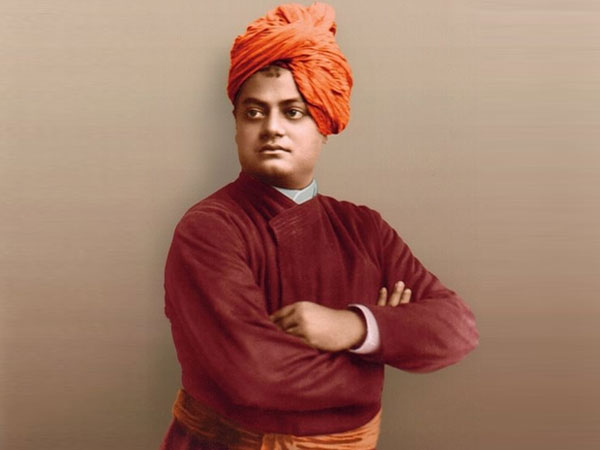
To Alasinga Perumal
U.S.A.
29th September, 1894
Dear Alasinga,
You all have done well, my brave unselfish children. I am so proud of you…. Hope and do not despair. After such a start, if you despair you are a fool…
Our field is India, and the value of foreign appreciation is in rousing India up. That is all… We must have a strong base from which to spread… Do not for a moment quail. Everything will come all right. It is will that moves the world.
You need not be sorry, my son, on account of the young men becoming Christians. What else can they be under the existing social bondages, especially in Madras? Liberty is the first condition of growth. Your ancestors gave every liberty to the soul, and religion grew. They put the body under every bondage, and society did not grow. The opposite is the case in the West–every liberty to society, none to religion. Now are falling off the shackles from the feet of Eastern society as from those of Western religion.
Each again will have its type; the religious or introspective in India, the scientific or out-seeing in the West. The West wants every bit of spirituality through social improvement. The East wants every bit of social power through spirituality. Thus it was that the modern reformers saw no way to reform but by first crushing out the religion of India. They tried, and they failed. Why? Because few of them ever studied their own religion, and not one ever underwent the training necessary to understand the Mother of all religions. I claim that no destruction of religion is necessary to improve the Hindu society, and that this state of society exists not on account of religion, but because religion has not been applied to society as it should have been. This I am ready to prove from our old books, every word of it. This is what I teach, and this is what we must struggle all our lives to carry out. But it will take time, a long time to study. Have patience and work!
–Save yourself by yourself.
Yours etc.,
Vivekananda
The “Original Influencer”: Why Vivekananda’s 1894 Message is the Reset Every Gen Z & Millennial Needs
We live in an era of “maximum connection and minimum purpose.” We are freer than our ancestors, yet many of us feel trapped by invisible shackles—imposter syndrome, the need for external validation, and a paralyzing fear of the future.
Over a century ago, Swami Vivekananda wrote a letter from the U.S. to his disciple Alasinga Perumal. He wasn’t just talking about 19th-century India; he was offering a psychological blueprint for self-mastery that is more relevant today than ever.
1. The Search for Meaning: “Soul vs. Society”
Vivekananda noted that a society thrives only when there is liberty. He observed that India had spiritual freedom but social bondage, while the West had social freedom but spiritual bondage.
The Modern Take: We often seek “social power” (likes, status, career titles) without checking our “spiritual base” (our values, mental peace, and core identity).
The Lesson: True meaning isn’t found in choosing a side; it’s in balancing your “out-seeing” (career/science) with your “introspection” (mindfulness/purpose).
2. Stop Waiting for Permission: “Save Yourself by Yourself”
One of the most powerful lines in his letter is: “Save yourself by yourself.” Psychologically, this refers to Internal Locus of Control. If you believe your happiness depends on the economy, your boss, or your partner, you remain a prisoner.
- Don’t depend on others: Your growth is your responsibility.
- Work wisely: Hard work is common; wise work (aligned with your nature) is rare.
3. The Paradox of Service: “Work for Others”
Vivekananda believed that “it is will that moves the world.” But he also knew that a “will” focused only on the “self” eventually burns out.
Psychology tells us that pro-social behavior—working for something bigger than yourself—is the ultimate cure for anxiety and depression. When you “work for others,” you aren’t just helping them; you are expanding your own ego until your personal problems seem small in comparison to the world’s needs.
4. Break the Bondage of Despair
“After such a start, if you despair you are a fool.” Vivekananda had zero tolerance for “learned helplessness.” He saw despair as a lack of imagination. He urged the youth to have patience because real change—in society and in yourself—takes a “long time to study.”
“Liberty is the first condition of growth.” Give yourself the liberty to fail, the liberty to learn, and the liberty to be unselfishly brave.
Dr Tanmay L Joshi
Tags: Leadership, MentalStrength, Motivation, NationalYouthDay, Purpose, SwamiVivekananda